

Scaling a startup is hard. Most founders have limited resources and a strategy that may not be clear enough to keep up with market changes. This slows growth and makes it difficult to move forward. A startup incubator program helps to clarify your strategy, giving you mentorship, support, and expert advice to refine your business model and connect to investor networks. A Startup incubator provides a safe environment for early-stage startups to address problems and test ideas for growth.
In this blog, we will look at how a startup incubator program can make scaling easier and explore the kind of support you can expect along the way.
The Difficulties Startups Face
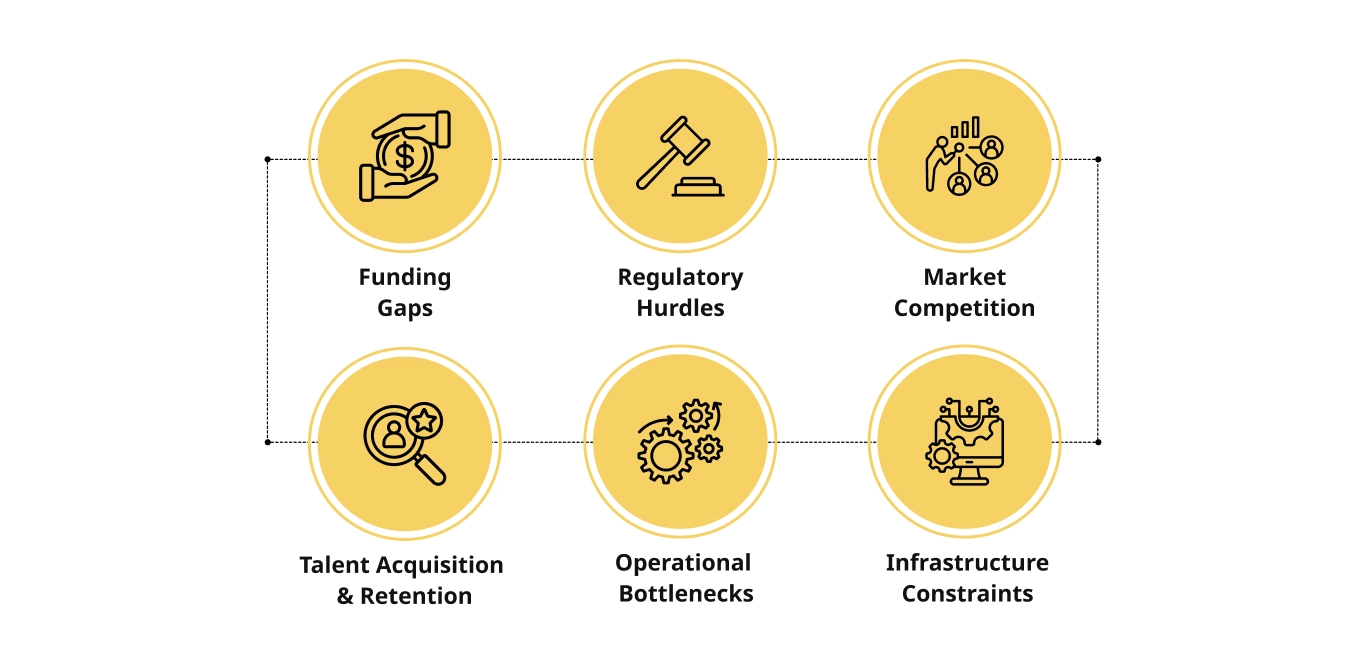
- Funding Gaps: Money is usually the first roadblock. For most startups, revenue comes in slowly, but investors want to see real results before they offer funds. So founders end up caught in a catch-22. They have great ideas, and many people are interested, but not enough cash to take things further.
- Regulatory Hurdles: Trying to keep up with all the rules and compliance needs more time and drains resources. Small teams have to deal with paperwork and legalities just to keep moving forward.
- Market Competition: Bigger companies have a good start because they already have customers, a team in place, and money to keep things moving. Startups have to struggle to get noticed in a crowded market.
- Talent Acquisition & Retention: Finding good people is tough, and keeping them around is even tougher. Startups often lose great employees because they cannot offer competitive salaries or the job security that bigger companies can offer.
- Operational Bottlenecks: When demand goes up, systems in companies become overloaded. Everything takes longer, and customers may notice the slowdown.
- Infrastructure Constraints: Most Systems and tools are not built to handle serious growth. Startups may need better software and processes to keep up.
Simple Ways to Solve Startup Struggles
- Lean Methods for Better Operations: Lean methods help to remove steps that do not add value. The team stays focused on important things and wastes less time.
- Building Resilient Financial Strategies: With a proper financial plan, you manage costs and funding delays. You always know how much capital you have and when it is time to raise more money.
- Leveraging Technology for Scalability: Good tools help you grow fast, and automating daily tasks saves time. When demand increases, having systems that can handle the pressure keeps everything running smoothly. Choosing the right technology from the start saves expensive fixes later.
- Building Better Leadership and Culture: Growth depends as much on people as plans. Strong leaders keep the team steady with clear communication and trust, reducing turnover.
Insights for Any Startup
You can develop a strong path to stay steady and grow by following a few basic guidelines.
- Focus on Sustainable Growth: Resist distractions that detract from long-term growth.
- Build Systems Early: Set up basic systems that define clear roles and simple routines, making scaling and communication easier.
- Prioritize Customer Feedback Loops: Have regular conversations with your users. Their feedback keeps your ideas grounded and stops you from wasting time on the development of unnecessary features.
- Invest in Leadership Development: Founders and early hires must learn how to lead, not just complete tasks. With good leaders to guide, your team can keep moving forward regardless of challenges.

Benefits of Joining a Startup Incubator
- Mentorship from Industry Experts: Founders get guidance on business strategy and market positioning. They also receive support on product decisions and early‑stage challenges to avoid common mistakes.
- Access to Funding Networks: Incubators connect startups with angel investors and early‑stage funding. They also help founders access grant opportunities. This increases the chances of securing funds at the right time.
- Support for Product Development: Startups get direct help turning their rough ideas into something real. They test features and improve their concepts, and get help developing a solid plan for moving from prototype to a product.
- Operational and Administrative Support: Startup Incubators offer legal advice and help with paperwork as needed. They also set up systems that make running a business easier for small teams.
- Networking Opportunities: Being part of a startup incubator program also means you are plugged into a network. Founders connect with other entrepreneurs and mentors. They also build relationships with potential partners and investors. These connections lead to real opportunities.
EEAT (Experience, Expertise, Authority, and Trust), + Engagement
The best startup incubator shows strong EEAT principles and real engagement.
- Experience: You do not have to face challenges alone. The mentors know the common mistakes, and they help you avoid them.
- Expertise: A Startup incubator brings in scaling frameworks that help founders get a growth roadmap.
- Authority: Acknowledgment from known incubators adds credibility. Investors pay attention when they see those names linked to your startup.
- Trust: The process stays open and honest, and you get support when you need it.
- Engagement: You join a group of founders who are working together as a team, learning from each other and addressing real problems.
To understand how incubators differ from accelerators, refer to this comprehensive resource, “ Startup Incubators vs Accelerators: Pros, Cons, and Key Differences.”
Choosing the Right Program
Checklist for Selection
When you compare startup incubator programs, a few things are important to focus on. Use this checklist:
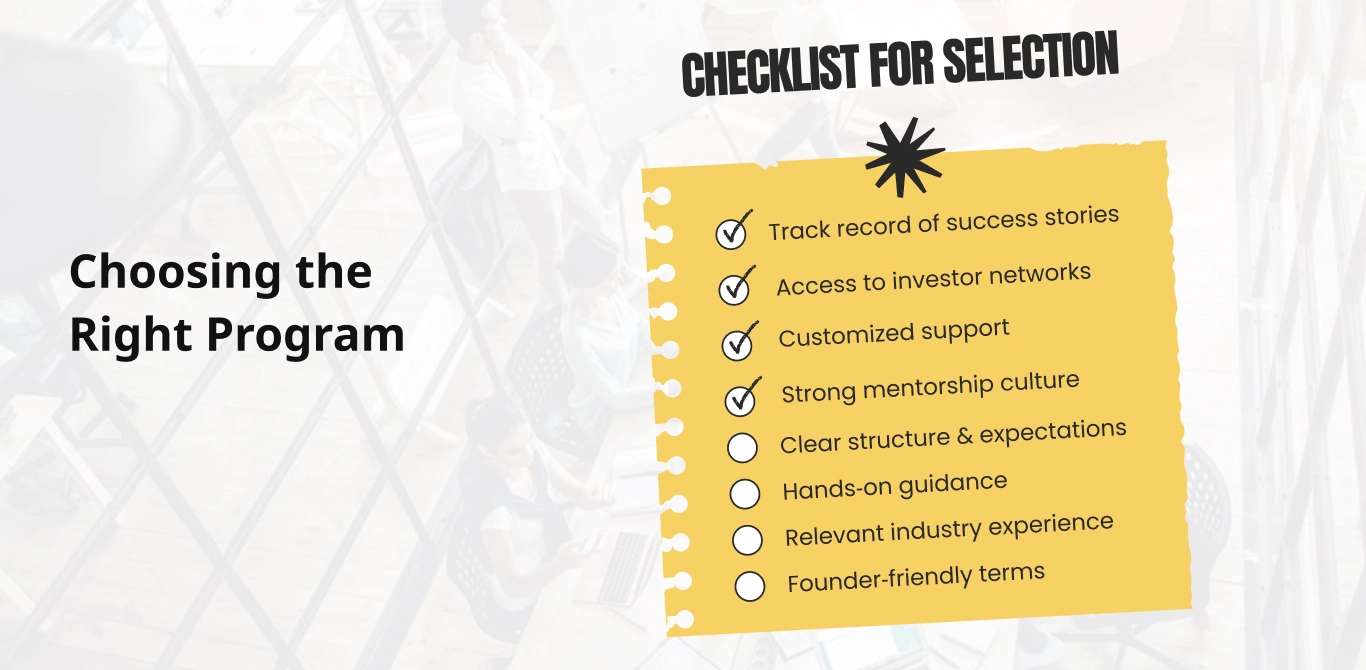
- Track record of success stories
- Access to investor networks
- Customized support
- Strong mentorship culture
- Clear structure and expectations
- Hands‑on guidance
- Relevant industry experience
- Founder‑friendly terms
Introducing Our Startup Incubator Program
The Field Group’s Startup Incubator Program is for founders who want clear direction and advice. We help you build a real business with a strong plan and numbers that investors can understand.
Startup Incubator Program Features
- Business Strategy & Financial Plan: We support your business strategy and operations. We also help with financial planning and fundraising.
- Product Development & Operational Effectiveness: We help you improve your product and processes. We also support you through each stage of the startup journey from the very beginning.
- Networking & Partnerships: You will have access to our networks and partners.
- Leadership Coaching & Exit Strategies: With our individual support, you can lead more clearly and make better decisions. You can also plan for increased valuation and exits.
Conclusion
Starting a company is challenging. The right plan, some honest support, and help from a Startup Incubator can save you time and money.
Consider The Field Group’s Startup Business Incubator. We have spent years working alongside founders – offering strategies, system improvements, and preparing companies for investors. Our focus is on giving you the advice and support that helps your business reach its potential.
FAQs:
Who should apply for a startup incubator program?
Entrepreneurs, early-stage founders, or teams with a validated idea, prototype, or MVP who need expert guidance, resources, and market support should apply.
How do startup incubators help a business scale faster?
They provide structured mentorship, investor connections, industry knowledge, strategy development, and operational support, helping startups reduce mistakes and grow faster.
What benefits can I expect from joining a startup incubator?
Key benefits include mentorship, funding access, workspace, product development support, networking, marketing guidance, and business strategy development.
What criteria do incubators look for when selecting startups?
They evaluate market potential, innovation, founder vision, scalability, team strength, and problem-solution fit.
How does mentorship in an incubator work?
Startups are matched with industry experts and business mentors who guide them on strategy, product development, marketing, finance, and growth planning.
Can incubators help validate my business idea?
Absolutely. They help analyze market demand, customer pain points, competition, and product viability.
Is a startup incubator worth it for small businesses?
Yes. Even small businesses benefit from expert guidance, structured growth plans, and connections that help them scale efficiently.